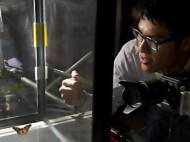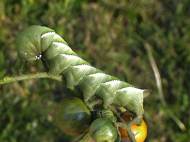
Weird movements in the abdomens of freely crawling caterpillars are making headlines in the fields of biology and engineering. The findings from a multidisciplinary team of researchers, including Jake Socha, Virginia Tech assistant professor of engineering science and mechanics, Michael Simon of Tufts University’s Department of Biology, and Barry Trimmer, professor of biology at Tufts,…
»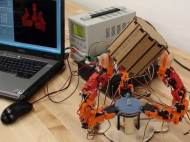
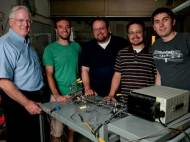
Development of snake-like technology underway at the U.S. Army Research Laboratory is moving the military toward sending more autonomous systems instead of Soldiers on search-and-rescue missions, a top priority in the most dangerous mission areas. Army researchers call it the Robotic Tentacle Manipulator, a developmental project that expands on snake robotics research introduced at Carnegie…
»
Within the sludge of wastewater treatment plants is an invisible world teeming with microbes. Here, diverse species of bacteria convert solid and liquid wastes into gases, some of which contribute to global warming. Two Stanford University engineers are developing a new sewage treatment process that would actually increase the production of nitrous oxide (“laughing gas”)…
»
The Margarido House, built by Mike McDonald and his wife Dr. Jill Martenson, is located on a steep lot located on Oakland hills. The couple got it after it has passed through several hands from a family that preferred to move rather than rebuild after the previous house got ravaged by fire in 1991. Despite…
»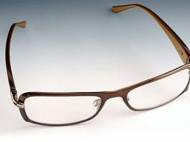
The folks from PixelOptics have invented electronic spectacles that can automatically change focus as you lower your head to read a book, thus making bifocal spectacles obsolete. The product, called emPower!, has been under development for 10 years and looks like an ordinary pair of spectacles. Since they are partnering with many frames manufactures, the…
»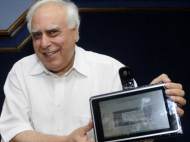
The Indian government unveiled the world’s cheapest “laptop” computer meant for students – a touch-screen device that costs $35. Developed by researchers at the Indian Institute of Technology and Indian Institute of Science, mass production of the computer might begin as soon as next year, claims Human Resource Development Minister Kapil Sibal, adding the government…
»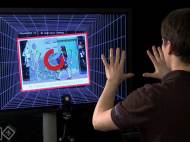
Scientists at Fraunhofer FIT have developed a non-contact gesture and finger recognition system that could be used as a future information interaction system. The novel system detects hand and finger positions in real-time and translates these into appropriate interaction commands. Unlike most of the systems we described before, this system does not require special gloves…
»
Researchers at the University of Tennessee reported that English ivy nanoparticles may protect skin from UV radiation better than other metal-based nanoparticles such as titanium dioxide (TiO2). The team was led by Mingjun Zhang, an associate professor of biomedical engineering at the University of Tennessee, who previously discovered that English ivy owes its amazing clinging…
»