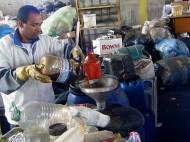
There are estimated half-million garbage pickers in Brazil, known as catadores, who turn waste into profit by sorting out recyclable items and selling their findings to recycling companies. With help from some MIT students, the catadores have a less-expensive and environmentally friendly option to transport those goods by using recycled cooking oil for their fuel….
»
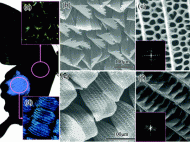
A scientific method developed by researchers at NASA’s Glenn Research Center uses atomic oxygen to save and restore works of art that would have been irreparably damaged. It can also completely sterilize surgical implants intended for human bodies, improve glucose monitoring devices for diabetic patients, and texture the surfaces of polymers to invite bone cell…
»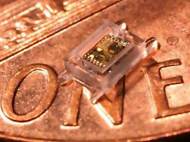
Nearly invisible millimeter-scale systems could enable computing to be used nearly in everything around us, and the researchers from the University of Michigan (U-M) claim that’s the future of the industry. They point to Bell’s Law, which says there’s a new class of smaller, cheaper computers about every decade. They plan to use their miniature…
»
Researchers at University of Michigan (U-M) and Penn State University are studying how plants like the Mimosa can change shape, and they’re working to replicate the mechanisms with artificial cells. Currently, their artificial cells are palm-size and larger, but they’re trying to minify them by using microstructures and nanofibers to construct them. They’re also exploring…
»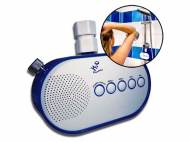
If you like to sing or listen to the music while you shower, here is another way to annoy your neighbors. The team that helped commercialize the award winning Wind-Up Radio has launched the world’s first water powered radio named H2O Shower Powered Radio. It uses the water pressure provided by household showers to power…
»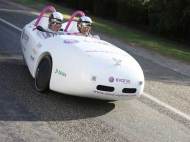
The Wind Explorer is a lightweight electrically-, wind- and kite-powered vehicle all in one. It might seem as a concept, but it already exists and it is on its route across the Australian continent. With extreme efficiency, the Wind Explorer combines technologies that are available today, but neither sensibly nor fully utilized. The wind explorer…
»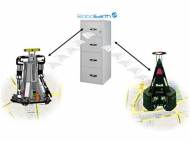
A group of about 35 people, part of the European project RoboEarth, is currently creating a worldwide, open-source platform that allows any robot with a network connection to generate, share, and reuse data. RoboEarth is developed in hope that it will greatly speed up robot learning and adaptation in complex tasks, as well as providing…
»
PaPeRo (Partner-type-Personal-Robot) – a personal robot from NEC Corporation – has been developed since 1997. It is being developed to interact with people and provide them with more information or entertain them. Due to increasing number of elderly people living alone, the folks from NEC conducted a research where they programmed PaPeRo to provide them…
»