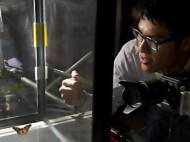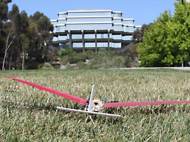
Birds routinely land on small surfaces, using wing morphing and flapping techniques. The UC San Diego engineers, led by mechanical and aerospace engineering professor Tom Bewley and graduate student Kim Wright, analyzed slow motion videos of birds landing to generate a working hypotheses for how biomimicry of wing morphing and flapping can be used for…
»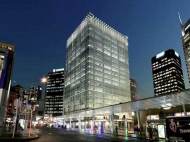
For several years Auckland’s leading businesses have been moving towards the regenerated waterfront area, and careful reuse of existing structure enabled the 21 Queen Street building architects to apply the latest energy saving technology and sustainable materials. AMP NZ Office Trust (ANZO) constructed this building to conform the New Zealand Green Building Council’s strict requirements…
»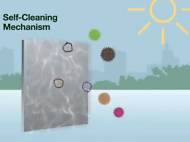
As the primary component of smog, nitrogen oxide (NOx) not only makes buildings dirty, but it also threatens the quality of the air we breathe. Alcoa Architectural Products has developed EcoClean technology – a special titanium dioxide coating for aluminum panels which counter smog and clean the panels from other organic materials such as diesel…
»
Technology developed during the long-running research conducted on the International Space Station is opening up a new way to keep hospital patients safe from infections. By using plasma (superheated, electrically charged gas), Max Planck Institute for Extraterrestrial Physics director Gregor Morfill is developing ways to kill bacteria and viruses that can cause infections in hospitals….
»
Instead being treated as useless mistakes, failed demonstrations can provide great insights into better learning, claim scientists from EPFL’s Learning Algorithms and Systems Laboratory (LASA). Their unusual point of view has led to the development of novel algorithms which enable machines to learn more rapidly and outperform humans by starting from failed or inaccurate demonstrations….
»
Many kinds of algae and cyanobacteria are capable to use the energy from sunlight in order to produce compounds needed for their own survival, and during that process they split water molecules and release hydrogen, which holds promise as a clean and carbon-free fuel for the future. A group of researchers found a way to…
»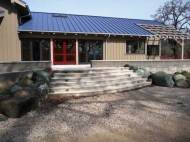
The Tipton Meeting House at the University of California Sedgwick Natural Reserve has been designated one of the “greenest” buildings, earning maximum LEED design credits and LEED Platinum certification. For the first time, Sedgwick has a central gathering place for its nearly 4,800 annual visitors, with indoor and outdoor classrooms for workshops, meetings, remote telescope…
»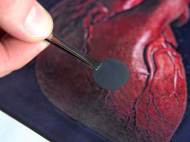
After a heart attack, the nerve cells in the heart’s wall and cells that keep the heart beating in perfect synchronicity are lost forever. The best approach would be to figure out how to revive the deadened area, and a group of researchers at the Brown University and the India Institute of Technology Kanpur turned…
»