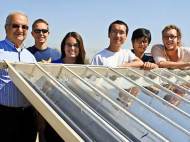
Typically, solar collectors must move and track the sun to achieve optimal energy production, necessitating additional equipment that can be costly to install and complex to maintain. A team of researchers from the University of California, Merced, have developed an entirely stationary system which is equally effective as solar tracking systems while being much simpler…
»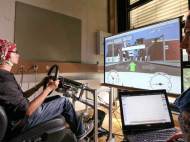
Modern automobiles have electronics to help us steer and drive safer while being capable to achieve higher speed. Nissan is collaborating with researchers from the École Polytechnique Fédérale de Lausanne in Switzerland (EPFL) in order to develop a system which could assist drivers in future by combining Brain Machine Interface (BMI) readings with data gathered…
»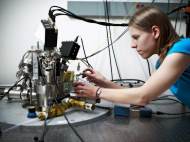
Researchers at the Stanford University have made an interesting discovery after they sandwiched two nonmagnetic insulators together. Contrary to expectations, the layer where the two materials meet has both magnetic and superconducting regions – two properties which haven’t been found to co-exist in nature. The discovery could be a starting point for creation of new materials…
»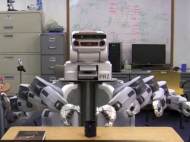
Researchers from MIT combined two innovative algorithms developed there to build a new robotic motion-planning system that calculates much more efficient trajectories through free space. Although such tasks seem intuitive and simple to us, most of the existing path finding algorithms rely to collision avoiding rather than finding more efficient paths between the robot’s initial…
»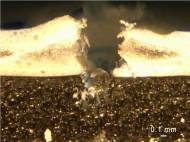
Swiss Federal Laboratories for Materials Science and Technology (Empa) researchers have been inspired by climbing plants to develop a polymer foam surface coating with a closed cell construction capable to reduce the pressure loss after the membrane is damaged. Aside making future inflatable structures more resistant, the technology could provide them with a longer operational…
»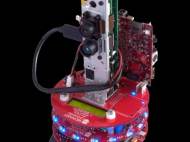
Currently available robots are mostly used for industrial tasks such as manufacturing, mining and inspection, as well as being an important research tool. As a part of his final year project, Monash University engineering student, Nick D’Ademo has designed an experimental robot called eyeBug. Aside being cheap to build, its flexible design and modularity encouraged…
»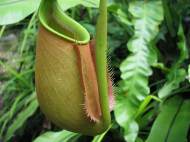
Inspired by pitcher plant, a group of applied scientists at Harvard University managed to create a material that repels just about any type of liquid, including blood and oil, and does so even while it is exposed to high pressure or freezing temperatures. Since it is carnivorous by nature, the ability to have a virtually…
»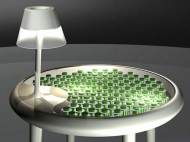
Although many gardeners treat moss as a menace and tend to eradicate it from their lawns, a team of designers and scientists at the University of Cambridge are developing a way to harness energy from moss by using it as biophotovoltaics (BPVs). BPV devices may become competitive alternatives to conventional renewable technologies such as bio-fuels…
»