By Dag G.
4 February 2012

After observing humpback whales, a group of researchers at the German Aerospace Center (Deutsches Zentrum für Luft- und Raumfahrt; DLR) in Göttingen have discovered and flight-tested a way to increase maneuverability and speed of helicopters. The findings could also improve the passenger comfort by lowering the resulting vibration caused by the main rotor. Although helicopters ... »
By Dag G.
One Comment30 January 2012

Since almost all of the body’s own regeneration mechanisms in the heart have become deactivated, a heart attack or other heart damage is serious for patients since the dead cardiac cells are irretrievably lost and scar tissue grows in place of the damaged muscle cells. Max Planck Institute for Heart and Lung Research in Bad ... »
By Dag G.
26 January 2012

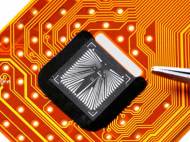
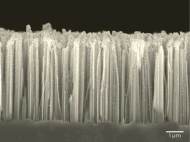
In order to check their glucose levels, diabetics usually have to draw blood. In order to eliminate the need for this invasive way of glucose level control, engineers at Brown University have designed a biological device that can measure glucose concentrations in human saliva. The technique takes advantage of a convergence of nanotechnology and surface ... »
By Damir B.
14 January 2012

In our article about solar power, we already wrote about concentrated solar power (CSP) power plants. In order to function, these plants need a lot of space and sunlight, and researchers at MIT collaborated with RWTH Aachen University in Germany to come up with a design that increases the amount of sunlight its mirrors collect, ... »
By Damir B.
12 January 2012

MIT engineers have developed a nanoscale biological coating that can halt bleeding nearly instantaneously. Although such materials exist for nearly a decade, their success was in creating an easily portable version where thrombin – a clotting agent found in blood – is coated on sponges. The coating could be easily stored and carried for application ... »
By Damir B.
30 December 2011

Oak Ridge National Laboratory biomedical engineers are perfecting a portable, wearable system to measure walking patterns that can be applied to real-world activities in a variety of settings. They are also developing a low-cost gait analysis system that can be used to analyze whether prosthesis fits the wearer, or if it is aligned correctly without ... »
By Dag G.
29 December 2011

Johns Hopkins researchers have developed a simple wound dressing that included a specially designed hydrogel – a water-based, three-dimensional framework of polymers – that promotes the formation of new blood vessels and skin, including hair follicles. It could lead to greatly improved healing for injured soldiers, home fire victims and other people with third-degree burns. ... »