By Dag G.
One Comment6 March 2011

For decades, materials scientists have been trying to come up with a substance which could be molded into complex shapes with the same ease and low expense as plastic but without sacrificing the strength and durability of metal. A team of researchers from Yale University came up with such material that would cost about the ... »
By Dag G.
One Comment25 February 2011

There are estimated half-million garbage pickers in Brazil, known as catadores, who turn waste into profit by sorting out recyclable items and selling their findings to recycling companies. With help from some MIT students, the catadores have a less-expensive and environmentally friendly option to transport those goods by using recycled cooking oil for their fuel. ... »
By Dag G.
One Comment24 February 2011

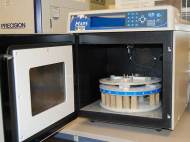
A scientific method developed by researchers at NASA’s Glenn Research Center uses atomic oxygen to save and restore works of art that would have been irreparably damaged. It can also completely sterilize surgical implants intended for human bodies, improve glucose monitoring devices for diabetic patients, and texture the surfaces of polymers to invite bone cell ... »
By Dag G.
One Comment22 February 2011

Nearly invisible millimeter-scale systems could enable computing to be used nearly in everything around us, and the researchers from the University of Michigan (U-M) claim that’s the future of the industry. They point to Bell’s Law, which says there’s a new class of smaller, cheaper computers about every decade. They plan to use their miniature ... »
By Rob Aid
3 Comments16 February 2011

The Wind Explorer is a lightweight electrically-, wind- and kite-powered vehicle all in one. It might seem as a concept, but it already exists and it is on its route across the Australian continent. With extreme efficiency, the Wind Explorer combines technologies that are available today, but neither sensibly nor fully utilized. The wind explorer ... »
By Dag G.
12 Comments6 February 2011

Spray-on skin that could help you heal your skin within several days after a serious burn seems as something we used to see in science fiction, but that technology has been developed worldwide for over 5 years. Compared to other currently available skin regeneration or replacement methods, this method shortens the time needed for generation ... »
By Dag G.
2 Comments4 February 2011

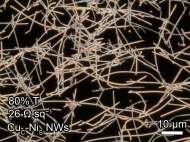
A multidisciplinary team of Stanford engineers led by Mike McGehee, Yi Cui and Mark Brongersma, and joined by Michael Graetzel at the École Polytechnique Fédérale de Lausanne (EPFL), is developing a new type of thin solar cell that could offer a new direction for the field. They succeeded in harnessing plasmonics – trapping light within ... »