
LED lamp can be powered “for free” by your phone line
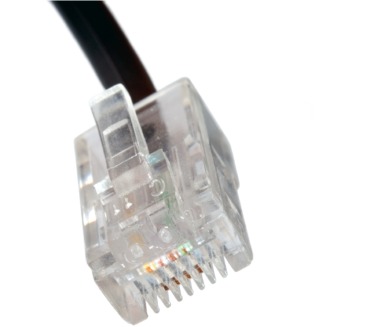 Getting power from your phone socket instead of the grid or a USB port for low voltage powered gadgets could start a potential new wave on the gadgets market. Is hooking up electronics to a phone jack unethical? Maybe, but the RJ11 lamp can do just that – use a phone jack to power a small lamp. It’s a sneaky way to go around power companies, but it does siphon cash from the local telephone company. Still, the RJ11 does bring a new use to increasingly-abandoned landline jacks.
The standard voltage for the telephone system is 48 volts DC. Ringing voltage is much higher, around 90 volts AC at a low frequency. Before trying to hook up all your electronics to the phone line, think twice: the voltage that runs through phone lines isn’t intended to provide significant amounts of current, and your phone service could get terminated for abuse. On the other hand, these cheap lamps could be used when phone lines still work during power-outs, letting children finish homework or letting you finish what you wanted to read.
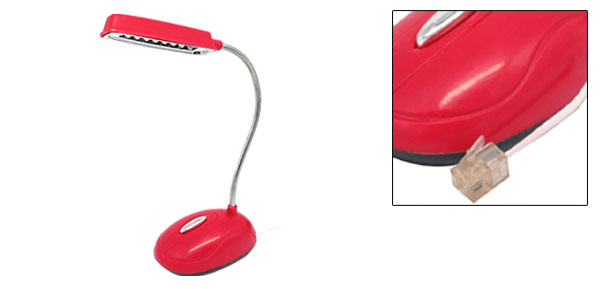
The lamp is energy efficient because it uses 8 LED bulbs for illumination, and each of LEDs lasts up to 100,000 hours. The 8 LED RJ11 Lamp reaches around 27cm high and weighs 74g. Base dimension are approximately 8.5 x 5.4 x 3.2cm (L x W x H). Cable length is approximately 63.5cm.
If the phone line is being called while you use the lamp the lights will flash and the connected phone will ring, so there’s no worry you’ll miss a call. However, if you answer the call you would be left in the dark, as the light wouldn’t be able to connect to the power from a telephone company.
The particular model doesn’t have a regular power connection or a battery compartment, so it can’t be used in any other manner except via RJ11 jack. The lamp design isn’t great, but we seriously doubt its constructors were looking at it as a wide market product, since many telephone companies ban the usage of similar technologies and monitor line usage. However, it is functional and pretty cheap, and sold out at most places you can get it.
Only time will tell is this the next big thing that both lighting and telephone companies could benefit from or a failed project. This part of the market isn’t exploited yet, so the lighting companies could work on more efficient and better looking lamps. Telephone companies could also benefit, since they could attract more customers with offers related to the power usage on their phone lines.








Good for small application.
Dr.A.Jagadeesh Nellore(AP),India
Hi !
i m trying to hook up a 18 leds (white – 3.2 v) in series with a resistor to a telephone line (RJ-11) , it measures about 54 v when idle .
1.Will power from the telephone line be sufficient to power up the leds brightly ?
2. Will telephone company come to know that i am drawing current from there line ?
3. What is the current rating when a call is receieved ?
I have one of these and it’s been ON 27/7 for past 2 years in my daughters bedroom. House phone and broadband internet all still work 100% and BT (phone line provider) have never bothered me. Problem is I can’t find anywhere online to buy more for my friends and family.
i have a intercom telecom network at my office , i would like to install a signal bulb that will function when the telephone bell rings .please let me know the solution i am having 24 different telephone lines .
If you used led lamps with batteries you can the phone co juice to keep them charged. No worries about incoming calls.
I think the phone company ought tout this as reason to stick with landlines.