Green architecture – Casa Torcida in Costa Rica

casa-torcida-1

SPG Architects transformed an abandoned steel frame and concrete slab structure into a five-level, 1,672 square meters (18,000 square feet), residence on a rain-forested mountainside of Osa Peninsula, Costa Rica. The dual concerns of accommodating the needs of the client and preserving the natural landscape shaped the design and construction process. Although it… »

Future applications of synthetic silk and challenges that remain

spider-on-its-web

Natural silk, fibers made by spiders and silkworms, is a material that is tougher than kevlar or steel, yet remarkably flexible. In recent years, researchers have worked to gain a better understanding of what silk is and how it’s made, with the goal of being able to consistently replicate and enhance its production synthetically. Aside… »

Robots that develop emotions in interaction with humans

robot-nao-and-dr-lola-canamero

The first prototype robots capable of developing emotions as they interact with their human caregivers and expressing a whole range of emotions have been finalized by researchers. Led by Dr. Lola Cañamero at the University of Hertfordshire, and in collaboration with a consortium of universities and robotic companies across Europe, these robots differ from others… »

Programming through demonstration – robot flipping pancakes

pancake-flipping-robot

If you haven’t learned to flip pancakes yet, here is a robot that will put you to shame. Acquiring new motor skills involves various forms of learning. The efficiency of the process lies in the interconnections between imitation and self-improvement strategies. A team of researchers from the Italian Institute of Technology are developing algorithms which… »

MIT’s device allows a non-invasive way to check glucose levels

mit-researchers-use-raman-machine-to-measure-glucose-levels-1

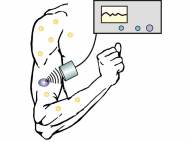
People with diabetes must keep a careful eye on their blood glucose levels, because too much sugar can damage organs, while too little deprives the body of necessary fuel. Most patients must prick their fingers several times a day to draw blood for testing. In one of our previous articles we wrote about hydrogel lenses… »

Biomimicry of honeybee eye could improve robotic vision

honey-bee

The capabilities and behavior of bees have inspired scientists in various fields as swarm movement and cooperation. Neurobiologists from Bielefeld University, Germany, have been researching the computational mechanisms that allow the nervous system to extract behaviorally relevant information from the retinal input and to use this information in behavioral control.
In their previous research, the folks… »

Origami inspired shape-shifting robots from MIT

mit-prototype-origami-robot

By combining origami and electrical engineering, researchers at MIT and Harvard are developing a transformable robot. The researchers have developed algorithms that, given a three-dimensional shape, can determine how to reproduce it by folding a sheet of semi-rigid material with a distinctive pattern of flexible creases. To test out their theories, they built a prototype… »

Green architecture – Earth House Estate Lättenstrasse

earth-house-estate-lattenstrasse-1

Earth houses are based on the interpretation of an environmentally conscious, ecological and progressive architecture. They stand out due to their closeness to nature and allow an experience beyond the usual four walls and their right angles. The earth house concept uses its surroundings as an advantage – the surroundings are not adapted to the… »

QUINCE search and rescue robot developed in Japan

quince-search-and-rescue-robot

A research group, consisting of people from International Rescue System Institute, Chiba Institute of Technology and Tohoku University, has developed a rescue robot named QUINCE. It will be used to collect rescue information in case of Chemical, Biological, Radiological and Nuclear (CBRNE) disasters, including hazardous substance leaks in the underground malls or tall buildings, and… »

Photon Enhanced Thermionic Emission process boosts efficiency of solar panels

new-solar-testing-from-stanford-university

Stanford engineers have found out how to simultaneously use the light and heat of the sun to generate electricity in a way that could make solar power production more than twice as efficient as existing methods and potentially cheap enough to compete with oil. Unlike photovoltaic technology currently used in solar panels (which become less… »