A foldable ceramic that is also electrically conductive

By Damir Beciri
31 March 2013

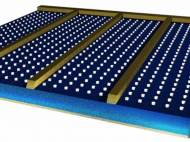
vanadium-pentoxide-ceramic-1Cooperation between researchers at Stuttgart University, the Max Planck Institute for Intelligent Systems and the Max Planck Institute for Solid State Research, resulted with a material which is as hard as copper, yet flexible enough to be rolled up or folded. This material is actually made from a vanadium pentoxide ceramic, and it has another... »

Cyro – large robotic jellyfish

By Damir Beciri
One Comment30 March 2013

jellyfishA group of researchers at the Virginia Tech College of Engineering, who previously developed a small robotic jellyfish Robojelly, developed its larger version and named it Cyro – a name derived from “cyanea” and “robot”. The cyanea part of the name originates from cyanea capillata (Lion’s mane jellyfish) – the largest known species of jellyfish... »

New terahertz imaging system could replace x-ray imaging

By Damir Beciri
27 March 2013

better-than-x-rays-a-more-powerful-terahertz-imaging-system-teamA group of researchers at the University of Michigan (U-M) have developed a laser-powered source and detector system which employs low-energy terahertz radiation with record high power and sensitivity. The breakthrough could enable doctors to see deep into tissues without the damaging effects of X-rays, or allow security guards to identify chemicals in a package... »

Marine animal tunicate can be used both as biofuel and fish food

By Damir Beciri
26 March 2013

forside-helbredde-tunicolFive researchers at the University of Bergen (UiB) and Uni Research have found that a certain type of tunicate – marine filter feeders that serve as bacteria eaters and as a food in cultures that consume larger number of seafood – can be used as a renewable source of biofuel and fish food. That means... »

Study leads to broad spectrum antivirals for deadly viruses

By Maja Bosanac
26 March 2013

filone-chbiol-imageResearchers at the Boston University School of Medicine (BUSM) found a new class of chemical compounds that have the potential to prevent replication of genetically diverse viruses. This could lead to the development of broad-spectrum antiviral drugs which can be used to treat a great deal of viruses, including highly pathogenic Ebola and Marburg viruses.... »

Using fungi to create more environmentally friendly alternative to some plastics

By Damir Beciri
22 March 2013

fairy-ringFungi, with the exception of mushrooms we find tasty at some point of their lifetime, tend to be something we associate with moldy bread and stench. Fungal colonies composed of mycelia are found in soil and on or within many other substrates. Researchers at Union College are cooperating with Ecovative Design to use mycelia to... »

Making fuel from genetically-modified cyanobacteria

By Maja Bosanac
21 March 2013

cyanobacteriaResearchers at KTH Royal Institute of Technology in Stockholm have succeeded in using genetically modified blue-green algae known as cyanobacteria to produce butanol – a hydrocarbon-like fuel that can be used to power motor vehicles. The interest in butanol as an alternative fuel stems from the fact that it has environmental and efficiency advantages over... »