Home » self-repair

Articles tagged with: ‘self-repair‘

Bionics| Tech»

Pitcher plant biomimicry leads to SLIPS – efficient liquid repelling coating

pitcher-plant-nepenthes-monkey-cup

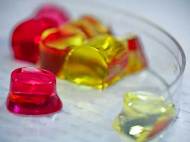
Inspired by pitcher plant, a group of applied scientists at Harvard University managed to create a material that repels just about any type of liquid, including blood and oil, and does so even while it is exposed to high pressure or freezing temperatures. Since it is carnivorous by nature, the ability to have a virtually ... »

Tech»

MIT researchers develop self-repairing photovoltaic technology

mit-self-repairing-solar-cell-team

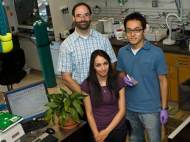
One of the problems with harvesting sunlight is that sunlight leads to a gradual degradation of many systems developed to harness it. But plants have adopted an interesting strategy to address this issue by constantly breaking down their light-capturing molecules and reassembling them from scratch, thus renewing the basic structures that capture the sun’s energy ... »

Robotics»

REEM-H2 – humanoid service robot created by PAL Robotics

reem-h2-1

PAL Robotics is a Spanish company, based in Barcelona, dedicated to the Research & Development of humanoid robots. It forms part of the PAL Group from Abu Dhabi in the United Arab Emirates. After many years of study and various prototypes, the company is now commencing the launch and production of commercial products. The latest ... »

Robotics»

Modular robots – SuperBot

superbot

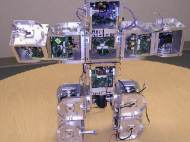
One of the most challenging issues for human-centered long-range space exploration is performing complex tasks in environments that are not human-friendly. These tasks range from activities such as inspection, maintenance, and assembly, to surface landing, exploration, and habitat-construction. A robotic solution is essential to this challenge, however, the traditional approach of building separate robots for ... »

Tech»

Self-healing concrete for better infrastructure

healingconcrete_apr_09.jpg

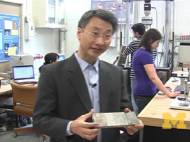
A concrete material developed at the University of Michigan can heal itself when it cracks. No human intervention is necessary—just water and carbon dioxide. New substance could make infrastructure safer and more durable. Self-healing is possible because the material is designed to bend and crack in narrow hairlines rather than break and split in wide ... »