
Pavegen flexible paving slabs generate energy from footsteps
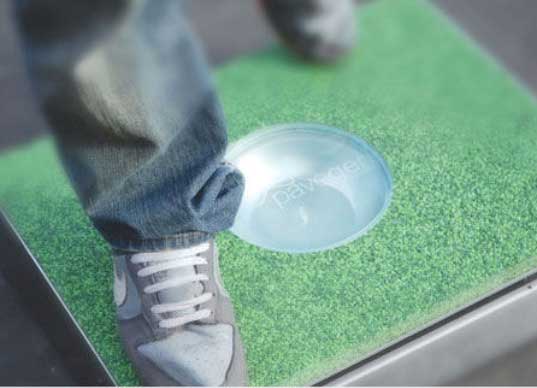 The need to reduce carbon emissions and keep costs down increases the importance of renewable energy for most governments and the tech industry. With that in mind, investments are being made in the popular green energy sectors such as wind, solar, and wave energy. However, our footsteps utilize and channel kinetic energy too, and an emerging startup called Pavegen has installed such squares of energy-generating pavement in London.
A slab of concrete harnesses kinetic energy whenever it is stepped on. This energy, created by 5 millimeters (quarter of an inch) of flex in the material, is then either stored by lithium polymer batteries contained within the slabs or transmitted immediately to nearby streetlights or other electronics. The current model, made from stainless steel, recycled car tires and recycled aluminum, also includes a lamp embedded in the pavement that lights up every time a step is converted into energy (using only 5 percent of the generated energy).
In an effort to keep the production of the pavement as green and sustainable as possible, Pavegen partnered with Ryburn Rubber Limited and Advanced LEDs (which has also invested in the idea) to make sure that its components create low environmental impact. Launched in July 2009, the company emerged from a project at the Loughborough University.
The average square of pavement produces about 2.1 watts of electricity. According to Pavegen, any one square of pavement in a high-foot traffic area can see 50,000 steps a day. Based on this data, only five units of Pavegen pavement could be used to power the lights at a bus stop for entire night. The company, led by 24-year old founder Laurence Kemball-Cook, aspires to spread their technology in a way which would allow it to power automatic doors, ticket machines, neon signs, and even computers and major appliances.
One of the possibilities is to install Pavegen tiles on busy sidewalks in front of stores to power their signage or any internal electronics. To encourage this adoption, the company says it will brand its slabs for its commercial customers. The slabs installed in East London happen to be green (thus suggesting its clean-tech solution) but they come in a variety of colors. The company believes the embedded lamp is important to inform the passersby of their contribution to the clean energy movement.
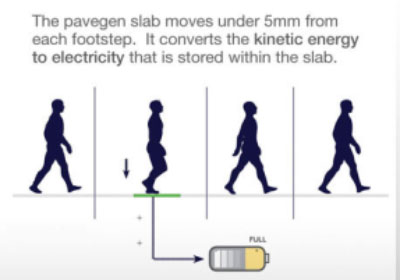
The startup plans to roll out more Pagevgen units in the United Kingdom in the next year, but it envisions installing them one day in Times Square in New York — think of all the electronic displays it could help power there — and other frequented locations in the U.S. One of the ideas pitched on its web site is to install slabs in subway turnstiles where thousands of people — about 36,000 per hour — walk a day to power station electronics.
The system from Pavegen could be used in very busy public areas as it will constantly be generating energy. Once the unit pays for itself, it continues to cut energy costs, the need for extended power wires and carbon emissions. The fact these units are self-contained means there’s no need for too much labor to install them into ground. Pavegen is not the only company thinking this way, and aside their direct competition, we’re bound to see many other companies trying to develop their energy harvesting products that could be used on our regular daily activities.






NECESSITY IS THE MOTHER OF INVENTION. Fear of losing conventional energy like coal,petroleum in the not too distant future,man’s quest for generating energy from all possible sources is amazing.
Dr.A.Jagadeesh Nellore(AP),India
I wonder the cost of the pavegen
author
According to folks from Pavegen, the cost has dropped by 70% just in the past year because of increased production, but Kemball-Cook hopes to get the price down to $50 per tile.
There’s an interesting read [0.9MB PDF] written by researchers from the University of British Columbia where they mentioned a much higher price less than a year ago… so you can assume the price of tiles according to those two statements.
Pavegen started a crowd funded “Kinetic energy from students” project on Kickstarter with the aim to fund two school projects, one in the U.S. and one in the U.K.
Each school will receive a fully funded four-tile permanent Pavegen installation in a busy hallway of their choice, complete with interactive renewable energy displays to show students the energy they are creating with Pavegen.
As soon as the project acquires the funding, each person who pledged will get a chance to vote for his or her school of choice – and the two schools with the most votes win the Pavegen installation.