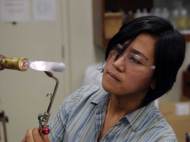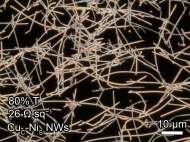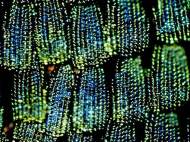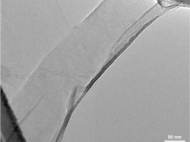
You remember we wrote about carbon nanotubes (CNTs) in one of our previous articles? Two groups of researchers have found ways to unfold CNTs in order to make nanoribbons of graphene. The experts claim that the development could point the way towards a new generation of electronics, including computer chips that are faster and tinier…
»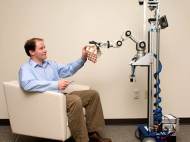
Most of us take our interaction with the world around us for granted. Manipulating objects play an especially important role in people’s lives. El-E is an assistive robot that is explicitly designed to take advantage of this common structure in order to retrieve unmodeled, everyday objects for people with motor impairments. Georgia Tech’s Healthcare Robotics…
»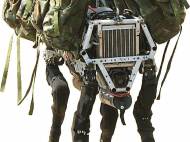
BigDog is a legged robot under development of BostonDynamics, with funding from DARPA. Their goal is to build unmanned legged vehicles with rough-terrain mobility superior to existing wheeled and tracked vehicles. The idea system would travel anywhere a person or animal could go using their legs, run for many hours at a time, and carry…
»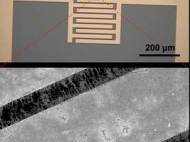
The discovery of nanotubes remains a debatable issue, especially because several scientists involved in the research could be likely candidates for the Nobel Prize. A large percentage of academic and popular literature attributes the discovery of hollow, nanometer-size tubes composed of graphitic carbon to Sumio Iijima of NEC in 1991. Carbon nanotubes have been produced…
»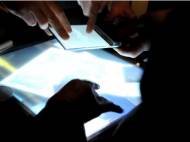
The SecondLight technology is going to help us with meta-data in a rather different way from the last article regarding SixthSense. Although often mixed with another Microsoft product called Surface the guys from Redmond clearly stated that SecondLight isn’t a second version of the Microsoft Surface. This technology allows a second set of images which…
»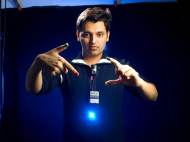
Remember the futuristic sci-fi computer interfaces where you operate devices with the use of your hand gestures? Although still a prototype, the Fluid Interfaces Group at MIT’s Media Lab unveiled the SixthSense, a wearable, gesture-driven computing platform that can continually augment the physical world with digital information.”We’re trying to make it possible to have access…
»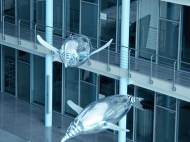
Folks from German company Festo keep creating bionic marine animals which float in air. Penguins are fascinating creatures which have lost their ability to fly in the course of their genetic development as marine birds, but Festo engineers managed to create an artificial penguin and taught it “autonomous flight in the sea of air”. Named…
»
Are you thinking about getting an e-reader but you’re not a fan of reading from a dimmed screen? A new technology called Electrofluidic Display (EFD) technology is going to change your mind. EFD is a product of an international collaboration of the University of Cincinnati, Sun Chemical, Polymer Vision and Gamma Dynamics. It’s the first…
»