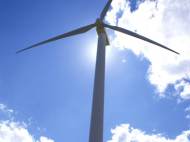
Clean, renewable energy is freely available – in the form of wind, sun, water and potential other forms we haven’t discovered yet. However, harnessing the energy with reliability and in a cost-effective manner remains a barrier. Wind power is one of the fastest growing alternative energy markets and researchers all over the world are developing…
»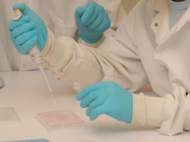
Nanoparticles specially engineered by J. Manuel Perez and his colleagues from University of Central Florida, could someday target and destroy tumors as well as spare the patients from toxic, whole-body chemotherapies. Perez and his team used a drug called Taxol for their cell culture studies because it is one of the most widely used chemotherapeutic…
»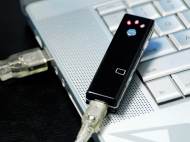
In this article we’re going to write about a spy cam that has another fun application. The Mini FPV Camera has relatively small dimensions (73mm x 20mm x 11mm) and it resembles the look of older MP3 players or dictaphones more than a camera. We used the term relatively because there are many smaller mini…
»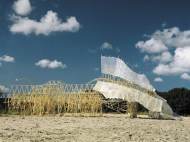
We decided to start writing articles regarding the combination of art and technology since it’s more frequent and exceptional. We hope you’ll find these combinations as much as we do. The series will start with a story about a Dutch artist Theo Jansen who has been working for almost 2 decades in order to create…
»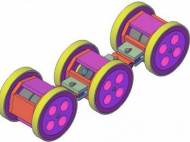
The 3-year project ‘Cargo Screening Ferret’ began in October 2008 and it involves researchers from the University of Glasgow, Loughborough University, City University London and defense and security specialists Qinetiq. The ferret will offer major advantages in combat against human trafficking. Currently, it is very difficult to detect people hidden in freight containers. Sensors on…
»
Drug smugglers and terrorists may soon meet their match: a handheld chemical detector powered by trained wasps or bees. Nicknamed “The Wasp Hound” the prototype tool houses five parasitic wasps that react to the smell of explosives, illegal drugs, and plant diseases. In theory, the insects’ movements set off an alarm to alert authorities. Although…
»
KAGUYA (SELENE: SELenological and ENgineering Explorer) is Japan’s first large lunar explorer which was launched by the H-IIA rocket on September 14, 2007. Its mission regarding lunar exploration has been keenly anticipated by many countries as it represents the largest lunar exploration project since the Apollo program. The lunar missions that have been conducted so…
»
A team of physicists and engineers at Bristol University has demonstrated exquisite control of single photons on a silicon chip to make a major advance towards quantum technologies, including super-powerful quantum computers and ultra-precise measurements. Jeremy O’Brien, Director of the Centre for Quantum Photonics at the Bristol University, who led the research, has demonstrated precise…
»