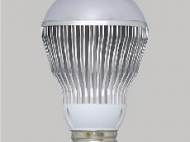
Many companies that produce light bulbs are slowly changing their production lines due to new laws that ban ordinary, incandescent, light bulbs. There are many alternative technologies as white-light LEDs, oLEDs (we wrote about those in one of our previous articles), plasma light bulbs, CFL’s, etc. NEC Lighting Ltd announced their release of two types…
»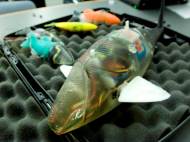
A team of MIT researchers has built a school of swimming robo-fish that slip through the water just as gracefully as the real ones, but not quite as fast. Real fish are exquisitely adapted to moving through their watery environment, and can swim as fast as 10 times their body length per second. So far,…
»
Besides building green surfaces on our roofs we need solar energy harnessing. Shouldn’t our roof tiles accomplish that? Guys from SRS Energy surely think so. Solar energy is a renewable alternative to power plants that burn fossil fuels, finite resources that contribute to pollution, global warming, as well as the reliance on imports for our energy…
»
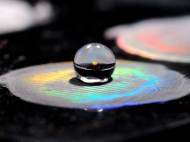
Logitech research showed that 40 percent of people have a glass surface in their home. This coupled with the increase in the popularity of laptop computers, means that people are moving around and coming into contact with a multitude of surfaces – like granite and lacquered wood – that challenge the tracking capabilities of standard…
»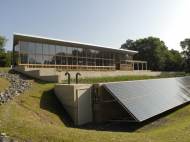
The Omega Center for Sustainable Living (OCSL) in Rhinebeck, New York is carbon neutral and produces 100 percent of its own energy through solar and geothermal power. OCSL officially opened on July 16th 2009 and it is on track to receive a LEED Platinum Certification, which cannot be officially granted until the building has been…
»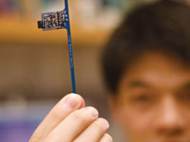
Radio-frequency identification (RFID) chips have a problem related to the memory of their previous states because they reset their information every time they lose their external radio frequency power supply. Computer scientists from University of Massachusetts Amherst are working on software, fittingly named Mementos, which could allow an RFID to perform computations that span many…
»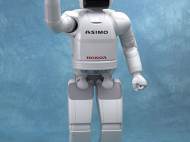
One of the most advanced contemporary humanoid robots ASIMO has been developed since 1980s. In a couple of our future articles we’re going to write about ASIMO’s features. In this article we’re going to write about its footsteps planning algorithm. The possible future foot placement positions are dependent on the current state of the robot….
»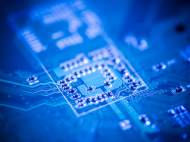
The electronic devices could get a boost in operating efficiency if manmade devices could be combined with biological machines. Lawrence Livermore National Laboratory (LLNL) researchers have developed a versatile hybrid platform that uses lipid-coated nanowires to build prototype bio-nanoelectronic devices. Combined biological components in electronic circuits could enhance bio-sensing and diagnostic tools, advance neural prosthetics…
»