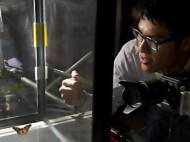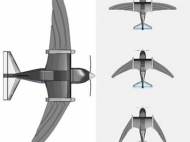
The students which made RoboSwift based the project on the findings of their supervisor, David Lentink of Wageningen University. In April 2007, with several co-authors he published a about the aerodynamic properties of the swift. During its lifetime, single swift flies a distance comparable to five roundtrips to the Moon and can remain in the…
»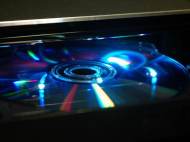
A team from Swinburne University of Technology in Australia said that by harnessing nanoparticles and a “polarization” dimension to existing technology, storage can be massively boosted without changing the size of a current disc. For the first time researchers from the university’s Centre for Micro-Photonics have demonstrated how nanotechnology can enable the creation of ‘five…
»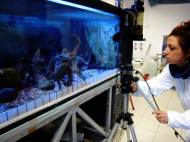
Cecilia Laschi, of Scuola Superiore Sant’Anna in Pisa, and her colleagues are attempting to build a robot with arms that work in the same way that octopuses’ tentacles do. Having no solid skeleton, it will be the world’s first entirely soft robot. Their goal is to use the knowledge related to the principles that give…
»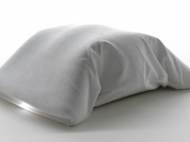
Fukitorimushi is an autonomous floor-cleaning robot that crawls like an inchworm and uses a super-absorbent nanofiber cloth to wipe up microscopic dust and residue that ordinary vacuums leave behind. Unveiled at the recent Tokyo Fiber Senseware (page in Japanese language) exposition in Milan, Fukitorimushi (scrubbing bug) is designed by Panasonic and incorporates nanofiber technology developed…
»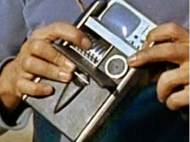
Astronauts on the space station have their own version of the “Star Trek tricorder” to search for signs of life, whether that life is from Earth or of extraterrestrial life as we know it. The hand held device acts as a miniature biology lab that allows space station residents to get results on a display…
»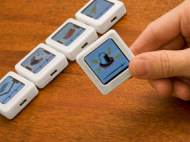
Imagine overturning a container of nuts and bolts, then looking through the resulting pile for a particular item or spreading photographs out on a tabletop and then beginning to sort them into piles. The Nintendo Wii remote control and Microsoft’s Surface multi-touch display have begun to change the way we interact with computers, but even…
»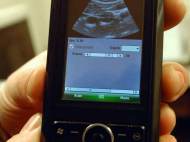
Computer engineers at Washington University in St. Louis have developed a device that resembles the medical version of a “Star Trek scanner” – a smart phone-compatible ultrasound probe that can image the human body. William D. Richard, WUSTL associate professor of computer science and engineering, and David Zar, research associate in computer science and engineering,…
»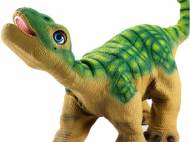
It is a trend around the world to cancel the production of projects which bring the joy to our children or the child within us all. Sony stopped producing the lovable doggy AIBO and the development of their very agile dancing robot QRIO in the beginning of the year 2006. Ugobe, the Idaho-based consumer robotics…
»