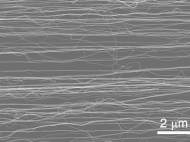
A thin film based on carbon nanotubes (CNT) could replace conventional magnetic loudspeakers. By applying an audio frequency current through the CNT, the loudspeaker can generate sound with wide frequency range, high sound pressure levels (SPL), and low total harmonic distortion (THD). The uniqueness of this advancement is that the films are flexible, stretchable, transparent,…
»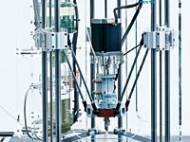
In the fictional Star Trek universe, a replicator is a machine capable of creating (and recycling) objects. 3D-printers today serve for creating rapid prototypes but their usage is becoming more and more diverse because of the growing variety of the materials used for production. Hence, there is a vast variety of objects you could “print”….
»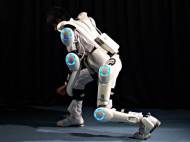
Robotic exoskeletons can be helpful in many ways as assisting the disabled and elderly in their daily tasks, or easing of any physically demanding task such as disaster rescue or construction. The HAL 5 exoskeleton helps the wearer to carry out a variety of everyday tasks, including standing up from a chair, walking, climbing up…
»
Fujifilm launched their new imaging technology called FinePix Real 3D System. It is the World’s first 3D digital imaging system that lets you enjoy three dimensional images without the need to wear special 3D glasses. The Real 3D W1 camera features the newly developed Real 3D Lens System. To achieve a natural, 3D image, it…
»
A fuel cell combines hydrogen and oxygen to produce electricity, heat, and water. In order to produce energy, fuel cells use oxygen and hydrogen. Hydrogen is high in energy, yet an engine that burns pure hydrogen produces almost no pollution. It’s also the most plentiful known element in the universe. Despite its simplicity and abundance,…
»
 The world of microorganisms is a dynamic one and all forms of life depend on microbial metabolic activity. In fact, there are more microbes living on and in every human being than there are human cells in our bodies. At the most basic level, there are microorganisms that are harmless or offer beneficial functions to… »