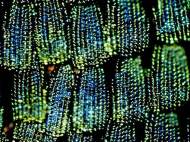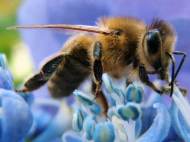
The capabilities and behavior of bees have inspired scientists in various fields as swarm movement and cooperation. Neurobiologists from Bielefeld University, Germany, have been researching the computational mechanisms that allow the nervous system to extract behaviorally relevant information from the retinal input and to use this information in behavioral control. In their previous research, the…
»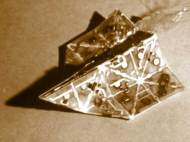
By combining origami and electrical engineering, researchers at MIT and Harvard are developing a transformable robot. The researchers have developed algorithms that, given a three-dimensional shape, can determine how to reproduce it by folding a sheet of semi-rigid material with a distinctive pattern of flexible creases. To test out their theories, they built a prototype…
»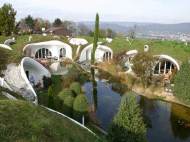
Earth houses are based on the interpretation of an environmentally conscious, ecological and progressive architecture. They stand out due to their closeness to nature and allow an experience beyond the usual four walls and their right angles. The earth house concept uses its surroundings as an advantage – the surroundings are not adapted to the…
»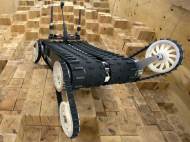
A research group, consisting of people from International Rescue System Institute, Chiba Institute of Technology and Tohoku University, has developed a rescue robot named QUINCE. It will be used to collect rescue information in case of Chemical, Biological, Radiological and Nuclear (CBRNE) disasters, including hazardous substance leaks in the underground malls or tall buildings, and…
»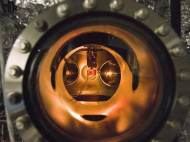
Stanford engineers have found out how to simultaneously use the light and heat of the sun to generate electricity in a way that could make solar power production more than twice as efficient as existing methods and potentially cheap enough to compete with oil. Unlike photovoltaic technology currently used in solar panels (which become less…
»