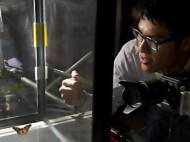
Here is an article about an application that offers on-the-fly video translations or processing from the printed text it is able to recognize. Although the news about Word Lens from Quest Visual was viral a few days ago, we didn’t publish our article about it before we managed to get some additional information about the…
»
Here is a trend we’ll be seeing bloom over the high-end gadgets sphere, and that is adding more computing power to gadgets that can employ most of it. LG Electronics (LG) recently unveiled LG Optimus 2X – world’s first smartphone with a dual-core processor. Along with more powerful multimedia features, the LG Optimus 2X’s high-performance…
»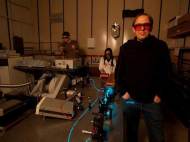
University of Utah physicists managed to store information for 112 seconds in what may become the world’s tiniest computer memory – magnetic “spins” in the centers or nuclei of atoms. Afterwards, they were able to retrieve and read the data electronically – a big step toward using the new kind of memory for both faster…
»
Researchers from the University of Greenwich are using ethical synthetic biology to create “living” materials that could be used to clad buildings and absorb the CO2 from the air. In collaboration with an architectural practice and a building materials’ manufacturer, the idea is to use protocells – bubbles of oil in an aqueous fluid sensitive…
»
Solera, at 1956 Lawrence St., is projected to be the first LEED Gold Certified multi-family building in the Rocky Mountain Region. It is currently first of its kind in downtown Denver. Designed by Zocalo Community Development, the 11-story Solera has 120 units and almost 511 square meters (5,500 square-feet) of retail space in walking distance…
»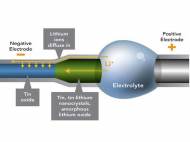
Battery developers know that recharging and using lithium batteries over and over damages the electrode materials. Researchers at the DOE’s Environmental Molecular Sciences Lab on the Pacific Northwest National Lab (PNNL) grounds have been observing how nanowires composed of tin oxide rapidly change shape and deform when they are being charged. “Nanowires of tin oxide…
»
There are many efforts to invent ways to make water desalination a low energy consumption process. Water purification usually requires a lot of energy as well, while utility companies need large amounts of water for energy production. Their goal is to find a low-energy-required treatment technology. Researchers from the University of Colorado Denver College of…
»
Using ambient energy (such as light, vibration, heat, radio waves, etc.) to produce electrical energy is being developed by many researchers around the globe. The folks from Fujitsu Laboratories Ltd. recently announced that they have developed a new hybrid energy harvesting device capable to generate electricity from either heat or light. Instead using multiple harvesting…
»