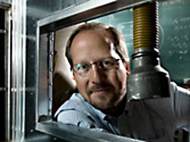
A new invention could cut energy use in buildings by 25 percent by creating a better indoor climate. The CleanAir invention was recently patented by a researcher in atmospheric chemistry at the University of Copenhagen. The inventor, Matthew Johnson, has shown his invention to the general public for the very first time at the conference…
»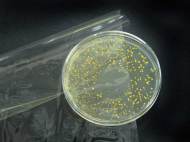
Supermarkets have only been able to keep products on their meat counters for a few days, but a group of researchers from Fraunhofer Institute for Process Engineering and Packaging is developing a technology to prolong that period. They have developed an antimicrobial active packaging film that destroys the microorganisms on the product surface, thereby increasing…
»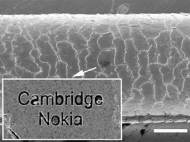
The Nokia Research Center in Cambridge was set up in 2007 as a partnership with the University of Cambridge. Soon after it was established, the Morph Concept was unveiled, to help build a picture of where the research at the labs was heading. They recently demoed three different strands of their research and those are…
»
Raytheon Company unveiled their second generation Exoskeleton named XOS 2 at their research facility in Salt Lake City, Utah, during a demonstration with Paramount Home Entertainment. The new robotic suit is lighter, faster and stronger than its predecessor, yet it uses 50 percent less power. Its enhanced design also makes it more resistant to the…
»
One of the problems with harvesting sunlight is that sunlight leads to a gradual degradation of many systems developed to harness it. But plants have adopted an interesting strategy to address this issue by constantly breaking down their light-capturing molecules and reassembling them from scratch, thus renewing the basic structures that capture the sun’s energy…
»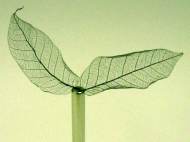
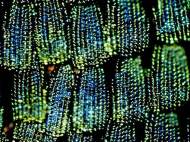
Nature’s fine structures are also suitable for technical applications because they exist in a numerous variety of forms, they usually display high mechanical stability and, due to their large surfaces, they provide suitable templates for catalysts and electrodes. Researchers from the Max Planck Institute of Colloids and Interfaces in Potsdam have succeeded in converting the…
»
Inspired by geckos, a team of engineers has developed a reversible adhesion method for printing electronics on a variety of tricky surfaces such as clothes, plastic and leather. Researchers from Northwestern University and the University of Illinois at Urbana-Champaign designed a square polymer stamp that allows them to vary its adhesion strength. The stamp can…
»
Here is an article with a theme this website mostly covers, and those are robots meant to aid in our everyday lives. Kawada Industries and Japan’s National Institute of Advanced Industrial Science and Technology (AIST) have recently revealed the latest version of a robot they have been developing for 10 years. The newest version of…
»