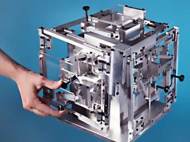
A doctoral student from EPFL’s Laboratory of Robotics Systems has developed a concept for modular industrial robots, based on the technology of parallel robots, whose precision is expressed in nanometers. Its developer named it Legolas, due to association to the precise elf of the same name from The Lord of the Rings, and due to…
»
The world’s first three-dimensional plasmon rulers, capable of measuring nanometer-scale spatial changes in macromolecular systems, have been developed by researchers from the Lawrence Berkeley National Laboratory (Berkeley Lab), in collaboration with researchers at the University of Stuttgart. The 3D plasmon rulers could br uses to provide scientists with new details on dynamic events in biology…
»
The Botanical Research Institute of Texas, Inc. (BRIT) has one of the largest herbarium collections in the United States. When BRIT decided to build their new herbarium and library building, they used careful site design, responsible landscape management, and conscientious human behavior, in order to reduce the footprint on the natural world as well as…
»
Two researchers at the Wellman Center for Photomedicine at Massachusetts General Hospital have developed a living laser, in which a single cell genetically engineered to express green fluorescent protein (GFP). Before you start thinking about sharks with lasers or other science fiction creatures, this technology is used to amplify photons into nanosecond-long pulses of laser…
»
Engineers at Oregon State University (OSU) have made a major step toward addressing one of the leading problems in energy use around the world today – the waste of half or more of the energy produced by cars, factories and power plants. They have built a prototype which captures and uses the low-to-medium grade waste…
»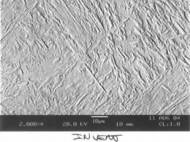
A Detroit entrepreneur surprised university engineers when he invented flash processing – a heat-treatment process which lasts only 10 seconds and it makes steel stronger and more shock-absorbing than the most common titanium alloys used by industry. Now the entrepreneur is working with researchers at Ohio State University (OSU) to better understand the science behind…
»
A group of researchers from Washington University in St. Louis came up with an idea to combine two existing technologies in order to clean up industrial oxidation reactions. They are using photovoltaic cells to power electrochemical reactions to eliminate the toxic byproducts of reactions commonly used in chemical synthesis — and with them the environmental…
»
Nina Mason Pulliam Rio Salado Audubon Center, a free-admission nature education center in the Río Salado Habitat Restoration Area, located less than two miles from downtown Phoenix, earned LEED Platinum certification and became the first building of that kind in Phoenix. Opened in fall, 2009, the center is operated by Audubon Arizona – a non-profit…
»