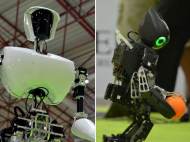
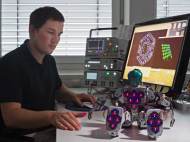
Virginia Tech’s Robotics and Mechanisms Laboratory team dominated the international robot soccer competition known as RoboCup 2011 which was hosted this past weekend in Istanbul, Turkey. Team CHARLI took first place at the Louis Vuitton Humanoid Cup, the Adult Size class with the humanoid robot CHARLI-2, and the Kid Size class with the miniature-humanoid-robot DARwIn-OP….
»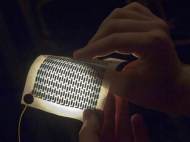
Almost as cheaply and easily as printing a photo on your inkjet, an inexpensive, simple solar cell can be created by special “inks” deposited on the paper. The researchers from MIT came with a process essentially the same as the one used to make the silvery lining on packages you see in everyday groceries –…
»
The Crosby Street Hotel has been awarded LEED Gold certification and it is verified by the Green Building Certification Institute (GBCI). The 11-story hotel has nearly 7,900 square meters (85,000 square feet) with 86 guest suites, a 99-seat screening room, meeting rooms, a guest library, drawing rooms and a lounge, as well as a lobby…
»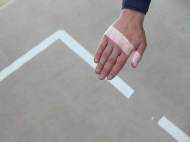
Automated helpers in industry today are usually enclosed by protective barriers. Industrial safety regulations permit contact between people and robots only under certain conditions, since the risk of injury to humans is too great. In order to allow safer collaboration, researchers at Fraunhofer-Gesellschaf are developing a projection and camera-based system able to prevent potential collisions…
»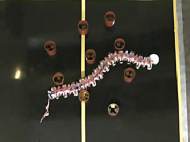
A researcher from the University of Leeds has drawn inspiration from nature to build a robotic worm that can wiggle its way around obstacles. Dubbed worm-bot, the robot is modeled after the Caenorhabditis elegans nematode – a minuscule free-living worm that uses a very simple nervous system of just over 300 neurons to control the…
»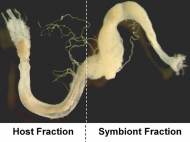
Although termites represent one of the peskiest household pests, they could prove to be beneficial for biofuel production. Enzymes in termite guts are instrumental in the insect’s ability to break down the wood they eat, and a group of researchers from Purdue University have applied their knowledge of termites to develop a cocktail of enzymes…
»
Researchers at Technical University of Munich (TUM) are developing an artificial skin for robots to help them navigate in their environments. It will provide important tactile information to the robot and thus supplement its perception formed by camera eyes, infrared scanners and gripping hands. They have built a single robotic arm equipped with sensors to…
»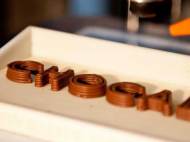
A while ago we wrote about Cornucopia – a printer for food, which works by storing, precisely mixing, depositing and cooking layers of ingredients. A group of researchers came up with their twist on food printing technology and made a 3D chocolate printer. In the long term, the technology could be used by customers to…
»