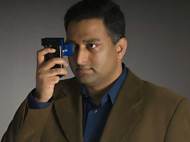
Cataracts are the leading cause of blindness worldwide, with over 48% of world blindness caused by age related cataracts. Existing diagnostic methods require Slit-lamps, which require a trained physician to interpret the results and aren’t affordable. Researchers from MIT have developed a simple device that can clip onto an ordinary smartphone or a tablet and…
»
Unlike other researchers who are developing self-repairing materials, civil engineers at MIT cooperated with physicists at the University of Potsdam, Germany, went in a different direction and developed a flexible skin-like fabric with electrical properties which could be applied to areas of structures where cracks are likely to appear and be used to detect cracks…
»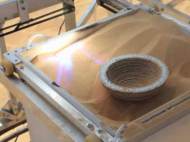
After a while, we’re publishing an article in our art and technology series, where we write about usage of technology to preserve or create art. Industrial designer Markus Kayser used the solar power and sand as raw energy and material to produce glass objects using a 3D printing process, that combines natural energy and material…
»
The Oregon Convention Center (OCC) is the largest convention center in the Pacific Northwest, which has led the industry in sustainable operations and business practices as the first to earn LEED-EB (LEED – Existing Building) in 2004 and in 2008, the first to be re-certified LEED-EB Silver. OCC was the first convention center to earn…
»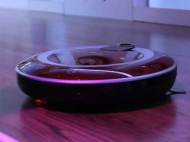
In one of our mini-series we started a while ago, we wrote about robotic vacuum cleaners that could take the throne from the ruler of that niche. In this article we’re going to write about LG RoboKing’s successor named Hom-Bot Smart Vacuum Cleaning Robot. The robot is developed for the European market, and it’s much better…
»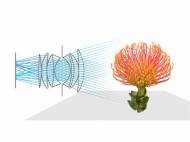
Lytro, Inc. is developing a light field camera that can capture all of the light rays in a scene in a way that offers new photographic capabilities, such as focusing a picture after it is taken. Lytro cameras will also create interactive, living pictures that can be endlessly focused and refocused by both the photographer…
»
Stanford researchers have developed a highly sensitive underwater microphone which is modeled after the extraordinarily acute hearing of orcas. The microphone can capture a wide range of ocean sounds in a range of approximately 160 decibels, significantly more than existing underwater microphones (hydrophones) which have limited ranges of sensitivity and do not perform well at…
»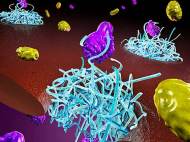
Researchers at Delft University of Technology and the University of Basel have created a biomimetic nanopore that provides a unique test and measurement platform for the way that proteins move into a cell’s nucleus. The biomimetic pore is fully functional and able to act selective, thus it can be used as a testing platform for…
»