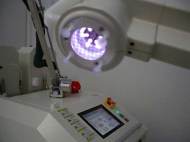
Technology developed during the long-running research conducted on the International Space Station is opening up a new way to keep hospital patients safe from infections. By using plasma (superheated, electrically charged gas), Max Planck Institute for Extraterrestrial Physics director Gregor Morfill is developing ways to kill bacteria and viruses that can cause infections in hospitals….
»
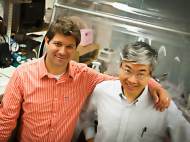
Instead being treated as useless mistakes, failed demonstrations can provide great insights into better learning, claim scientists from EPFL’s Learning Algorithms and Systems Laboratory (LASA). Their unusual point of view has led to the development of novel algorithms which enable machines to learn more rapidly and outperform humans by starting from failed or inaccurate demonstrations….
»
Many kinds of algae and cyanobacteria are capable to use the energy from sunlight in order to produce compounds needed for their own survival, and during that process they split water molecules and release hydrogen, which holds promise as a clean and carbon-free fuel for the future. A group of researchers found a way to…
»
The Tipton Meeting House at the University of California Sedgwick Natural Reserve has been designated one of the “greenest” buildings, earning maximum LEED design credits and LEED Platinum certification. For the first time, Sedgwick has a central gathering place for its nearly 4,800 annual visitors, with indoor and outdoor classrooms for workshops, meetings, remote telescope…
»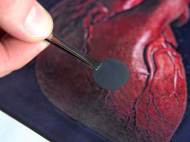
After a heart attack, the nerve cells in the heart’s wall and cells that keep the heart beating in perfect synchronicity are lost forever. The best approach would be to figure out how to revive the deadened area, and a group of researchers at the Brown University and the India Institute of Technology Kanpur turned…
»
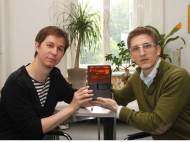
Sony has developed integrated Augmented Reality (AR) technology which enables additional information to be displayed on the device’s screens such as virtual objects, or images and texts that cannot be identified by visual perception alone. Smart AR uses the markerless approach, and enables quick recognition of objects and can be tracked at high-speed along with…
»
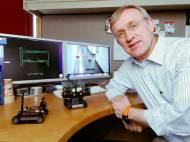
We already wrote about several 3D printers, capable to help in rapid prototyping, however, researchers at the Vienna University of Technology have developed a much smaller, lighter and cheaper 3D printer. With this kind of printer, everyone could produce small, custom-made 3D-objects at home, using building plans from the internet – and this could save…
»
Advanced autonomous robots are being developed by a team from the Georgia Institute of Technology, the University of Pennsylvania and the California Institute of Technology/Jet Propulsion Laboratory (JPL). The program vision is for collaborative teams of tiny robots that could roll, hop, crawl or fly just about anywhere, carrying sensors that detect and send back…
»