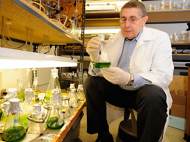
One of the efforts to become fossil fuel independent is to use biofuel generated by crops, but it stirred a big debate due to lack of food and fertile ground around the world. Using algae as biofuel can be up to 300 times more efficient than conventional crops, and researcher from the Iowa State University…
»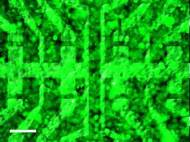
Research that could lead to compensation for some sort of neural damage, or monitor how our bodies function, may seem like something you see in science fiction. However, bioelectronic applications could get a step closer because a team of researchers from the Technical University of Munich and the Juelich Research Center developed a graphene-based transistor…
»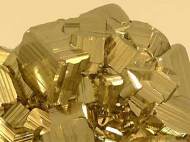
Although it has been referred as “fool’s gold” throughout the history, dating to times of ancient Rome and tricking prospectors for centuries, yellow-toned mineral pyrite found its use as an inexpensive and promising option for solar energy. Oregon State University (OSU) researchers discovered related compounds that use the advantages of the material without the downsides…
»
Vestas, a global wind turbine company from Denmark, has recently completed their new headquarters in Aarhus, Denmark. Named House of Vestas, the new office building exhibits various sustainable features and it is built to meet the to the low-energy class 1 building according to the Danish building code and expected to become the first LEED…
»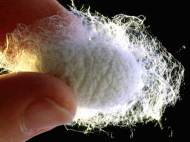
A combined team of researchers from the Oxford University and University of Sheffield used a novel method to analyze the energy used in the formation of fibers in natural silk and synthetic materials in order to demonstrate that natural unspun silks taken from a silkworm are a thousand times more efficient than common plastics when…
»
Aside developing more efficient methods in hydrogen production, researchers around the world are developing ways to store hydrogen for subsequent use. University of Oregon (UO) chemists developed a boron-nitrogen-based liquid-phase storage material for hydrogen which is more suitable than currently known ways to store hydrogen because it can perform safely at room temperature and is…
»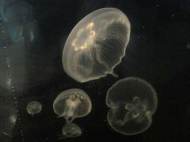
Engineers at Virginia Polytechnic Institute and State University (VirginiaTech) have used inspiration from nature and developed a robot whose design and motion patterns resemble moon jellyfish (Aurelia aurita). Named Robotjelly, the robot was developed for the U.S. Office of Naval Research back in 2009, and its latest improved iteration was presented at the 2011 meeting…
»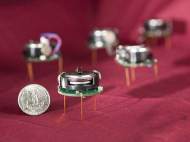
In our previous articles, we already wrote about many examples of swarm robotics, but the researchers from Harvard University stand out by its design simplicity and low cost which is suitable in experiments related to algorithms developed for robotic swarms. Their goal to create a platform that could be produced quickly and inexpensively to form…
»