Here’s a project that earned its spot in our green architecture series, despite the fact it is a complex of 27 buildings. Although this project is from few years ago and there are a few counter-sustainable facts about the complex, we had to write about it to demonstrate how a complex could be built with…
»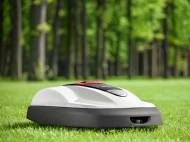
If you own a large piece of land which requires lawn mowing maintenance, you’ll be happy with news that Honda decided to enter the robotic lawn mower market with Honda Miimo – their first commercial robotic product for domestic use. Although it represents Honda’s first step towards providing customers with robotic solutions that could improve…
»
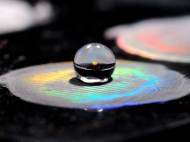
An international team of scientists led by a researcher from Carnegie Institution of Washington observed the world’s first hybrid crystalline/amorphous material which is capable of indenting diamond. The material is a superhard mixture of crushed carbon spheres and a hydrocarbon solvent, which could find many potential applications for a range of mechanical, electronic, and electrochemical…
»
Ever since we published the article about the lightest microlatice structure last year, I wanted to cover another interesting and light material which was created back in 1930s, and perfected in last 30 years. Aerogels (also known as solid smoke) are currently the world’s lightest solid material with astonishing insulating properties that could find their…
»
Although they were invented before lasers, MASERs (Microwave Amplification by Stimulated Emission of Radiation) didn’t quite find their use as lasers since they required specific conditions to operate. Scientists from the National Physical Laboratory (NPL) and Imperial College London managed to develop a solid-state MASER able to operate at room temperature, thus enabling its more…
»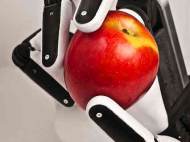
Robotic hands are regarded as one the most complex parts of the robotic system. Complexity due to many joints and embedded sensors, combined with need to maintain their light weight and dexterity, lead to high prices of robotic hands. Researchers at Sandia National Laboratories managed to develop a modular and affordable robotic hand meant to…
»
As we reported in our article about a similar technology, sunflowers are able to slowly rotate from east to west during the course of a sunny day in order to maximize the amount of received sunlight in a process called heliotropism. Researchers from University of Wisconsin-Madison found a way to create their version of a…
»
Researchers from Stanford University cooperated with the Volkswagen Electronics Research Lab to develop Shelley – a self-driving Audi TTS that recently managed to reach 193 km/h (120 mph) on a recent track test at Thunderhill Raceway, north of Sacramento, California. The car managed to autonomously get around the course in less than two and a…
»